
Updated
One shared screen. One free puzzle. Whole class.
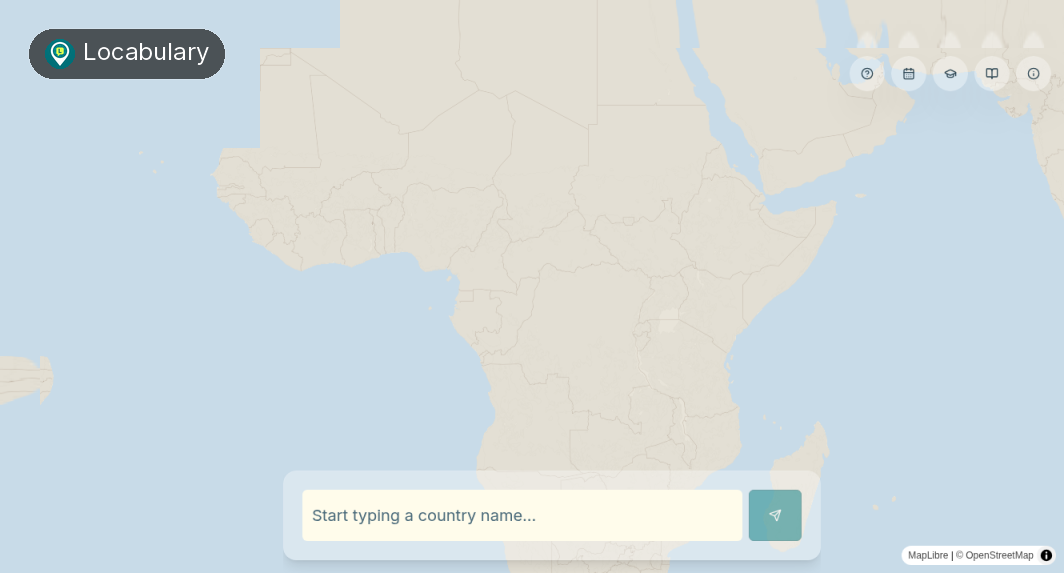
You can run a whole-class geography routine on one shared screen, without handing out devices. You open the puzzle on the projector, students suggest countries out loud and you do the clicking. It works as a 5-minute warm-up, and students don’t need accounts.
Why one screen
Handing out 30 devices takes time. So do logins and the “my screen looks different” moments. With one screen, everyone sees the same map at the same time, and the lesson starts with talk instead of set-up.
Locabulary is a daily geography puzzle where you chain countries, and it’s built for this: one board, on one shared screen, with no student accounts.
How to run it
Before the lesson (about one minute)
- Open the puzzle on the display before students arrive.
- Decide how you will pick callers: hands up, names from a jar or going round the room.
In class (about 5 minutes)
- Tell the class the rule: “You suggest, I click.”
- Ask for an opening country. Take the first clear voice.
- Before each guess, pause for a few seconds so more students have time to think.
- Ask the caller one quick reason: “Why that one?”
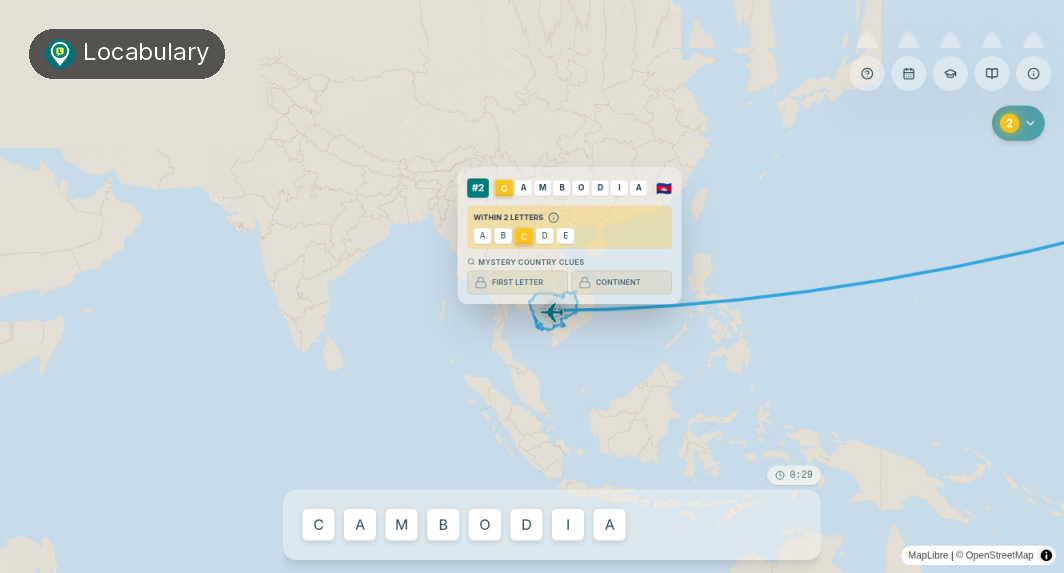
- Make the move and say out loud what happened.
- Pass to the next caller. Keep turns short.
- When time is up, close the tab and move on, finished or not.
If energy dips, change who calls next. You stay the driver.
Why talk helps
The heart of this routine is students talking about a shared problem. There is research behind giving them time to do that.
In a study of peer discussion in a university genetics class, students answered a question, discussed it with their neighbours, then answered a similar new question on their own. The results showed that discussion improved understanding, even when no one in the group knew the right answer to begin with. That was a university class, not a school one, so take it as a good reason to give students talk time.
Talk also gives you a running check on what students know. A well-known review of classroom formative assessment by Black and Wiliam reported firm evidence that strengthening the frequent feedback students get about their learning led to substantial learning gains. Asking “Why that one?” and replying to the answer is a small, frequent piece of that feedback.
Make each turn a moment of feedback
When you reply to a guess, say something about that guess. A meta-analysis of educational feedback brought together 435 studies. It found a medium effect of feedback on learning overall, and that the information in the feedback strongly shaped how well it worked.
So “Good try” is fine, but “Close, that one is just across the border” gives students more to work with.
Timing at a glance
- Set-up before the lesson: about one minute
- Play: about 5 minutes
- Wrap-up: one sentence about the country you found
2 variations
Think, pair, call
Before each guess, give pairs 20 seconds to agree on a country. Then pick a pair to call it. More students get to talk in each turn, and quieter students can try out an idea with one person first.
Rotating driver
Once the class knows the routine, invite one student to the front to be the driver for the day. The class still suggests and the driver only clicks. You keep the pace and choose the callers.
Keep it short
Stop at 5 minutes, even mid-chain. A routine that stays short is easier to keep each day, and the rest of your lesson stays on time.
Try it with your class
Open today’s puzzle on your shared screen at the start of your next lesson.
Ready for today’s mystery country?
Play Locabulary