
Updated
The last 5 minutes: a geography exit ticket on one board
A geography exit ticket is a short check at the end of a lesson. You open one puzzle on the shared screen, students call out answers while you drive, and you finish with a single question about the place you found. It takes about 5 minutes and you don’t need student accounts.
What an exit ticket is for
An exit ticket tells you what stuck before students leave. It is a small piece of formative assessment, which means checking learning while there is still time to act on it.
A well-known review of classroom formative assessment by Black and Wiliam looked across many studies. It reported firm evidence that strengthening the frequent feedback students get about their learning led to substantial learning gains.
So the point is not a score. The point is a quick read of the room, and a moment of feedback for students on the way out.
Why a quick quiz at the end can help
Being asked to recall something is a kind of practice. A review of quizzing in the classroom brought together data from 48,478 students in 222 studies. It found that quizzing raised achievement to a medium extent. The effect changed with things like corrective feedback and how often students were quizzed.
That is why the last step below is one question, with the answer said out loud straight after.
How to run it
Locabulary is a daily geography puzzle where you chain countries. It runs on one shared screen, and students don’t need accounts.
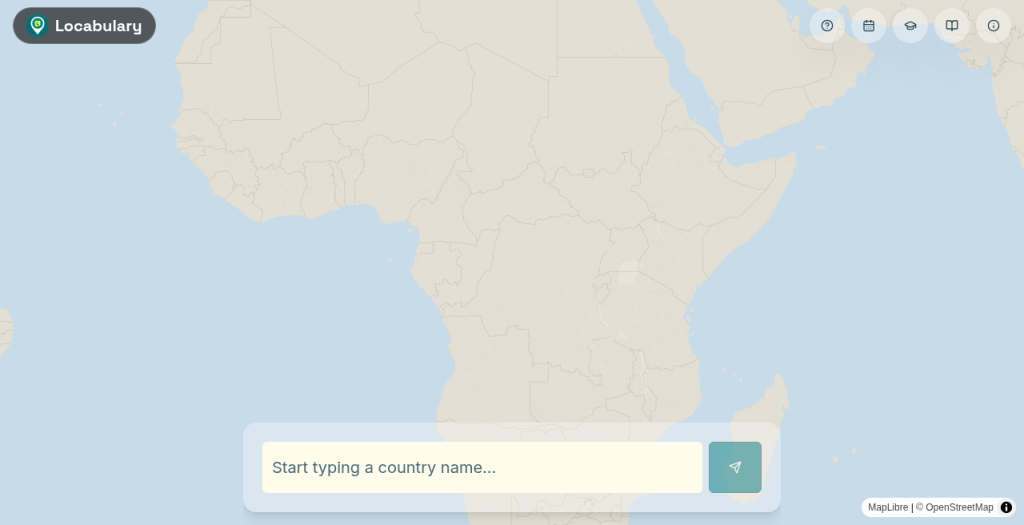
Before the lesson (about one minute)
- Bookmark the puzzle so it opens in one click.
- Decide your exit question now. Pick one: the capital, the continent, or “where is that from us?”
In the last 5 minutes
- Open the puzzle on the shared screen. You keep the mouse.
- Tell the class the rule: “You suggest, I click.”
- Take one clear voice at a time. Name the next caller if hands go up together.
- Stop when you find the country, or at 2 minutes to the bell.
- Ask your one exit question. Give students 10 seconds to think before anyone answers.
- Say the answer out loud and close the tab.
If you only get 3 guesses in, that still works. An unfinished chain still gives you a place to ask about.
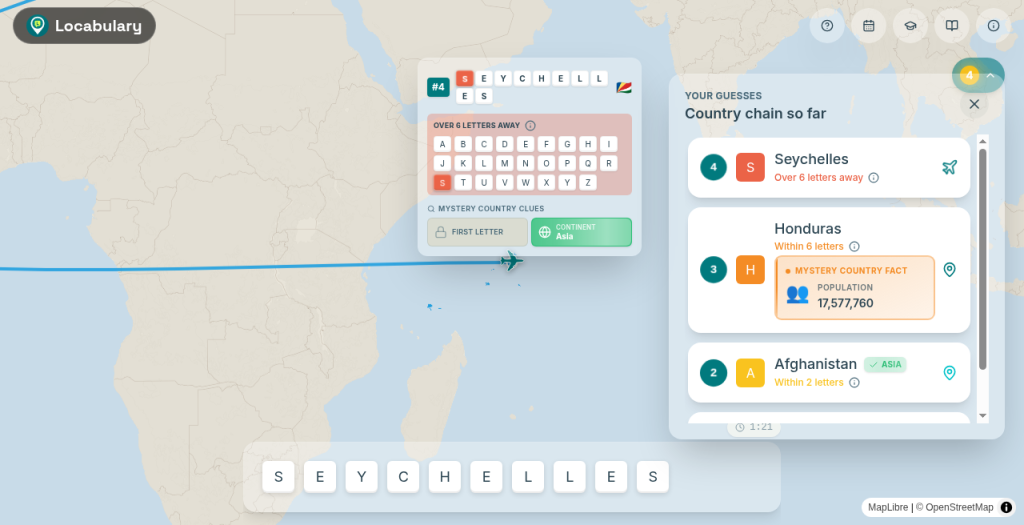
Make the feedback count
Feedback works best when it tells students something about their own answer. A meta-analysis of educational feedback brought together 435 studies. It found a medium effect of feedback on learning overall. It also found that what the feedback said made a big difference to how well it worked.
You can do this in a sentence. If a student names the wrong continent, say which one it is in and one thing nearby. That beats a plain “not quite”.
Timing at a glance
- Set-up before the lesson: about one minute
- Play: about 3 minutes
- Exit question and answer: about one minute
2 variations
Written exit slip
Hand out small slips of paper as you open the board. When the puzzle ends, students write one line: the country and one thing about where it is. Collect the slips at the door. You can sort them into “got it” and “not yet” in a couple of minutes, and start tomorrow’s lesson with the “not yet” pile.
Think, then turn
Ask the exit question, then give students 20 seconds to tell the person beside them before anyone answers to the class. Talking it through with a partner can help. In one study of peer discussion in a university genetics class, students who discussed a question did better on a similar new question afterwards, even when nobody in the group knew the answer at first. That was a university class, so treat it as a reason to try this, not a promise.
Keep it to one routine a day
If you already use a warm-up at the start of some lessons, keep the exit ticket for other days. One short routine a day is easier to keep going than 2.
Try it with your class
Open today’s puzzle on your shared screen in the last 5 minutes of your next lesson.
Ready for today’s mystery country?
Play Locabulary